
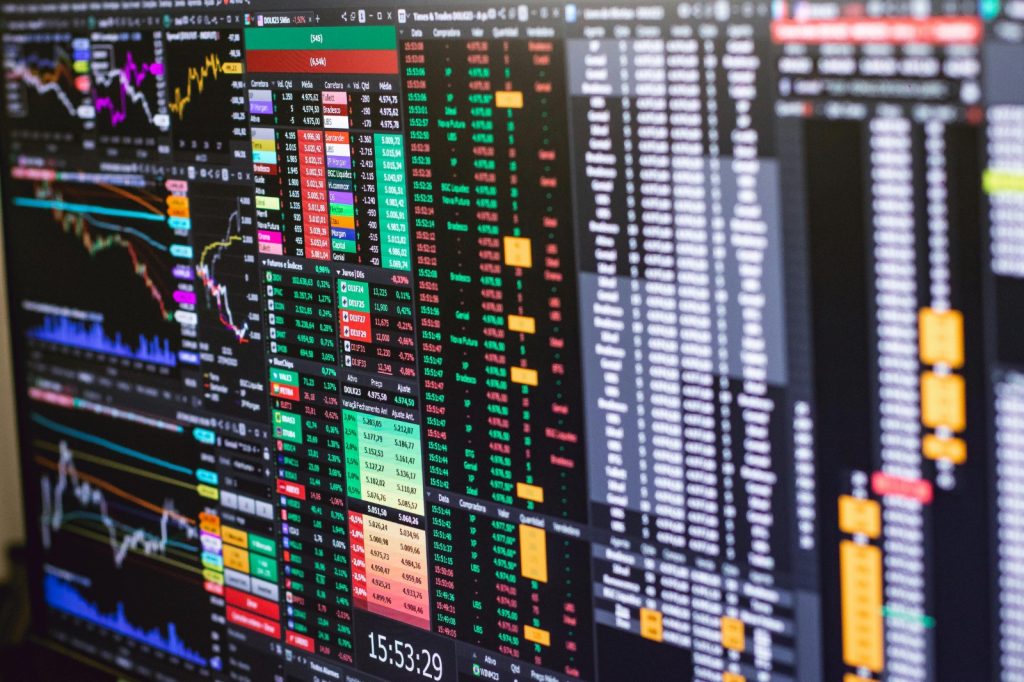
The financial markets They are, by nature, volatile. The price of the dollar goes up or down depending on political decisions that no business owner can anticipate with certainty.
The interest rates vary depending on macroeconomic cycles that escape the control of any company. Raw material prices can collapse within weeks due to an international conflict or an energy policy decision. For companies operating in this environment—which means virtually all of them—the question is not whether financial risk will exist, but how to manage it intelligently.
The Cobertura, o financial coverage, is the response the markets have developed for this problem. It is a strategy through which a company contracts specific financial instruments, called derivatives, with the aim of neutralize or reduce the impact of adverse movements in variables such as the exchange rate, interest rates, or the price of key inputs.
Far from being an exclusive tool of banks or large corporations, the Hedging is an accessible practice today and necessary for companies of various sizes seeking to protect their margins and provide certainty to their financial planning.
Understand the financial derivatives, its main hedging instruments, and when to use them is an essential skill. Any executive or business owner who makes financial decisions should master it.
This article offers a clear and practical guide on these concepts, without assuming advanced technical knowledge.
What is hedging and why does it matter?
The term Cobertura comes from the English word hedge, which means “hedge” or “fence.” In finance, the metaphor is precise: just as a fence delimits a piece of land, a hedging strategy limits the range of financial loss that a company is willing to assume.
It doesn't eliminate the risk completely, that's impossible, but it narrows it down, makes it predictable, and allows for operating with greater peace of mind.
To illustrate the basic logic, let's think about a Chilean company that exports products to the United States and receives its income in dollars. If the dollar depreciates against the peso, the company's local currency revenue will decrease, even if its internal costs remain the same.
The margin is compressing without any operational factor having changed. The Currency hedging allows this company to fix an exchange rate in advance for your future currency conversions, avoiding negative surprises and improving financial planning.
The same principle applies to importers paying in foreign currency, companies with dollar debt, industrial companies relying on inputs such as copper or oil, or any organization with variable-rate liabilities.
In all these cases there is exposure to market variables outside the company's control, and hedging offers a structured way to manage it.
Is It is important to distinguish hedging from speculation.. The speculator takes positions in derivatives with the aim of making profits from market movements.
The hedger, on the other hand, already has an underlying exposure in their business and uses derivatives to offset it. The purpose is not to make money from the derivatives themselves, but to protect the operating result of the core business.
The main derivative instruments used for hedging
The Financial derivatives are contracts whose value depends, or “is derived,” on the behavior of an underlying asset: a currency, an interest rate, a stock index, or the price of a commodity. There are several types, each with distinct characteristics and applications.
Forwards
Son private contracts between two parties who agree today on the price at which they will exchange an asset on a specific future date. For example, a company can agree with its bank to buy dollars in 90 days at an exchange rate agreed upon today.
Forwards are highly flexible because they are customized according to the amount, term, and currency needed by the company. They are not traded on an exchange, which makes them accessible for tailor-made transactions, but also implies a counterparty risk that must be adequately managed.
Futures
They work similarly to forwards, but They are standardized and traded on organized markets (derivative exchanges). When operating in a centralized market with a clearing house as the counterparty, credit risk is practically zero.
However, standardization limits flexibility: contracts have fixed amounts, dates, and specifications. They are more common in commodity hedging (oil, grains, metals) and highly liquid currencies.
Options
Unlike forwards and futures, options grant the right, but not the obligation, to buy or sell an asset at a specified price within a set timeframe. Whoever buys an option pays a premium to acquire that right.
This gives it a flexibility that other instruments do not have: if the market moves favorably, you simply do not exercise the option and benefit from the movement; if the market moves adversely, you exercise the option and protect yourself. The cost of this flexibility is the premium paid.
Swaps
Son agreements whereby two parties exchange future cash flows according to predefined conditions. The most common in the corporate world are interest rate swaps (IRS), in which a company with variable-rate debt “swaps” those payments for fixed-rate payments.
The Swap is especially useful when a company wants certainty about its future financial burden, regardless of what market rates do. Cross currency swaps, meanwhile, allow for the management of exposures in different currencies simultaneously.
The choice between these instruments depends on several factors: the type of risk to be hedged, the time horizon, the need for flexibility, the acceptable cost for the hedge, and the financial sophistication of the company. In many cases, The most effective hedging strategies combine more than one instrument.
Types of financial risk that hedging can cover
Not all companies face the same risks. The A company's financial exposure structure depends on its sector., its business model, its financing structure, and its exposure to international markets.
Even so, it is possible to identify three major financial risk categories which most frequently justify the use of hedging instruments.
Exchange rate risk.
It is probably the most common form of risk in the Latin American context. Any company that has revenue, costs, debt, or investments denominated in a currency different from that of its financial statements is exposed to foreign exchange risk. Exporters suffer when their local currency appreciates; importers, when it depreciates.
Companies with dollar-denominated debt can see their financial burden increase dramatically with a currency depreciation. The currency hedging, through currency forwards or swaps, is the most direct tool to manage this exposure.
Interest rate risk
The companies that have financing at variable rates are exposed to a rise in market rates substantially increasing their financial expenses. This can deteriorate profitability, compromise cash flow, or affect debt service capacity.
The interest rate swaps allow converting that variable-rate debt into fixed-cost debt, providing predictability regarding future payments. Conversely, companies with fixed-rate financial assets may be exposed to the risk that rates rise and their assets lose relative value; in those cases, the hedging may have the opposite direction.
Commodity price risk
Companies in the energy, agricultural, mining, or chemical industry face asignificant exposure to volatility in the prices of its inputs or final products. An airline that relies on jet fuel, an industrial plant that uses natural gas, or a soybean exporting company that needs certainty about its selling price can benefit from using futures or forwards on these assets.
Hedging does not seek to take advantage of market fluctuations, but rather ensure that the business is viable even in unfavorable scenarios.
In addition to these three main types, there are more complex forms of financial risk that can be hedged with derivativesthe credit risk (through credit default swaps), the inflation risk (through instruments indexed to price indices) or even certain climate risks relevant to industries such as agriculture or energy.
The frontier of available instruments has grown significantly in recent decades.

How to implement a hedging strategy: key considerations
Implement a hedging strategy it is not simply a matter of taking out a financial instrument. It requires rigorous preliminary analysis, a clear definition of objectives, and systematic monitoring over time. Companies that approach hedging without adequate preparation run the risk of incurring unnecessary costs, or worse yet, amplifying their risks instead of reducing them.
The first step is accurately identify and quantify the company's financial exposure. This involves analyzing future cash flows in different currencies, the debt maturity schedule, the cost structure based on market variables, and the sensitivity of the financial result to different price scenarios.
Without this clear diagnosis, any hedging strategy will lack a solid foundation.
The second step is define the desired degree of coverage. Companies rarely hedge 100% of their exposure, because that would mean completely forfeiting the benefits of favorable market movements.
Lo most common is to establish a partial coverage, typically between 50% and 80% of the portfolio, to provide protection against adverse scenarios without eliminating all upside potential. This decision must be aligned with the company’s risk tolerance, its regulatory requirements, and its financial policy.
The third step is select the most appropriate instruments for the identified risk profile. This selection must consider not only the effectiveness of the hedge, but also its cost (premiums, spreads, transaction costs), its accounting treatment under applicable IFRS or GAAP standards, and any tax implications it may have.
In Chile, for example, derivative instruments have a specific treatment under the regulations of the Internal Revenue Service that must be considered in the strategy's design.
Finally, exposures change as the business evolves, and market conditions that justify coverage today can change tomorrow. Therefore, a effective hedging strategy It requires periodic review, clear internal governance, and the advice of professionals who understand both the instruments and the business being protected. This monitoring discipline is as important as the initial design of the strategy.
Hedging limitations and common mistakes
The Hedging is a powerful toolbut it is neither infallible nor free. Understanding its limitations is as important as understanding its advantages, especially for avoid errors that can have significant financial consequences.
First of all, the Hedging has a cost. Forwards involve a differential relative to the spot exchange rate; options require the payment of a premium; swaps may involve structuring costs. These costs must be evaluated in relation to the expected benefit of the hedge.
In low-volatility contexts, the cost of hedging can be disproportionate regarding the mitigated risk, making it not worth implementing.
Secondly, the Hedging can result in opportunity costs. If the market moves favorably (the dollar rises and the exporting company had hedged its exchange rate at a lower level), the company does not benefit from that positive movement. Some managers perceive this as a loss, which can generate pressure to abandon hedges at the worst possible time.
Clear communication about hedging objectives and an organizational culture that understands that hedging does not seek to maximize profits on derivatives, but rather to protect the core business, are essential elements for the strategy to be sustainable.
Thirdly, There is a risk of over-coverage or coverage in the wrong direction. This happens when the business's actual exposure is not well identified, and the company enters into derivatives that amplify its risk rather than reducing it. This mistake, although less common, can have devastating consequences. The history of corporate finance features several famous episodes of companies that lost substantial sums due to poorly designed or poorly executed derivatives strategies.
Another A frequent error is not considering the accounting treatment of derivatives. Under IFRS 9, for a derivative to be designated as a hedging instrument and receive favorable accounting treatment (hedge accounting), it must meet certain documentation, effectiveness, and economic relationship requirements with the hedged item.
If these requirements are not met, changes in the fair value of the derivative must be recognized in the statement of profit or loss, which can generate unwanted accounting volatility, even when the economic hedge is effective.

Hedging as part of comprehensive financial management
A financial hedging strategy effective cannot be designed in isolation. It is part of comprehensive financial management that begins with a clear risk diagnosis, follows with a coherent financial policy, and is supported by valuation models that make it possible to quantify the impact of different scenarios on the company's value.
The WACC weighted average cost of capital of a company can be affected by its hedging strategya company that reduces the variability of its cash flows can justify a lower cost of capital, which in turn positively impacts its valuation.
Likewise, in due diligence processes o valorization of companies for mergers and acquisitions, the existence —or absence— of a clear financial risk management policy it is a factor that sophisticated buyers consider when evaluating business risk and determining the acquisition price.
At M&A contexts, The review of the target company's derivatives positions is a fundamental part of the financial due diligence.
Undisclosed derivatives positions, contracts with early termination clauses, or hedging strategies that are inconsistent with the actual exposure of the business are events that could significantly affect the valuation or the terms of the agreement.
Ultimately, the Hedging is much more than a technical treasury tool. It is an expression of the culture of risk management of an organization and an element that contributes to stability, predictability, and ultimately, the sustainable value of the company.
The organizations that address their financial risks systematically and proactively, they are in a better position to plan for the long term, access financing on favorable terms, and face adverse contexts with greater resilience.
How to implement hedging and not fail in the attempt
The hedging and financial derivatives they represent one of the pillars of financial management modern. In an economic environment characterized by exchange rate volatility, interest rate uncertainty, and commodity price fluctuation, ignoring these tools is equivalent to leaving the business's financial outcome at the mercy of external factors over which the company has no control whatsoever.
Implementing an effective hedging strategy requires, however, much more than taking out a forward or a swap.
It requires a a thorough assessment of the company's financial exposure, a clear policy on the objectives and limits of hedging, the selection of appropriate instruments, and systematic monitoring of positions over time.
When done right, the Hedging not only protects cash flows: it contributes to business stability, improves the quality of financial projections and strengthens the confidence of investors and creditors.
For business owners and executives who have not yet formalized their financial risk management, the first step is to understand what exposures exist in their business and what the potential impact of different market scenarios is.
Based on that assessment, it is possible to design a strategy that is tailored to the reality and risk profile of each organization.